
The steel industry is undergoing a significant shift as carbon emissions become an increasingly important factor in international trade. With the implementation of the Carbon Border Adjustment Mechanism (CBAM), importers in the European market are now required to report and eventually account for the embedded carbon emissions associated with certain imported products, including steel.
As a result, factors such as production processes, emissions data, and carbon reporting are becoming as important as product quality, specifications, and pricing. This shift is one of the key reasons why buyers are increasingly seeking low-carbon steel suppliers capable of supporting evolving sustainability requirements. Businesses involved in steel exports and imports must now consider carbon compliance requirements alongside traditional commercial considerations, as environmental performance is becoming an integral part of market access and competitiveness.
Although CBAM is currently in its transitional reporting phase, its financial obligations are scheduled to take effect from 2026. This makes it essential for manufacturers, exporters, traders, and buyers to understand how embedded emissions can influence costs, compliance requirements, and long-term business strategies.
What is CBAM (Carbon Border Adjustment Mechanism)?
The Carbon Border Adjustment Mechanism (CBAM) is a carbon pricing framework introduced by the European Union as part of its broader climate strategy. Its objective is to ensure that imported carbon-intensive products are subject to carbon costs comparable to those faced by manufacturers operating within the EU.
CBAM applies to selected sectors and requires importers to report the greenhouse gas emissions associated with the production of imported goods. Based on these emissions, importers may be required to purchase CBAM certificates, the value of which is linked to the EU's carbon pricing system.
The mechanism aims to encourage greater transparency in emissions reporting and support the transition toward lower-carbon industrial production. For exporters supplying products to the European market, understanding and reporting embedded emissions has become an important aspect of international trade compliance.
| Step | Process |
|---|---|
| Emissions Reporting | The emissions associated with the production of the imported product are reported. |
| Verification | The reported emissions data may be reviewed and validated according to applicable requirements |
| Carbon Pricing Assessment | Carbon costs are determined based on the relevant EU carbon pricing framework. |
| Certificate Requirement | Importers may need to obtain CBAM certificates corresponding to the reported emissions. |
Which Industries Does CBAM Cover?
Six sectors at launch. Steel is the one that takes the most heat.
| Industry | Why It's Included |
|---|---|
| Steel and Iron | Highly embedded carbon from blast furnace production |
| Cement | Energy-intensive clinker manufacturing |
| Aluminum | Electricity-heavy smelting |
| Fertilizers | High-emission nitrogen production |
| Hydrogen | Varied emission profiles by production method |
| Electricity | Carbon content depends on the generation source |
How CBAM Will Impact Indian Steel Exporters?
India's exposure to CBAM is significant, particularly for exporters supplying steel and other carbon-intensive products to the European market. Many manufacturers are still in the early stages of measuring, monitoring, and reporting their carbon emissions. As a result, when international buyers request verified emissions data, some suppliers may face challenges in providing the required documentation and transparency.
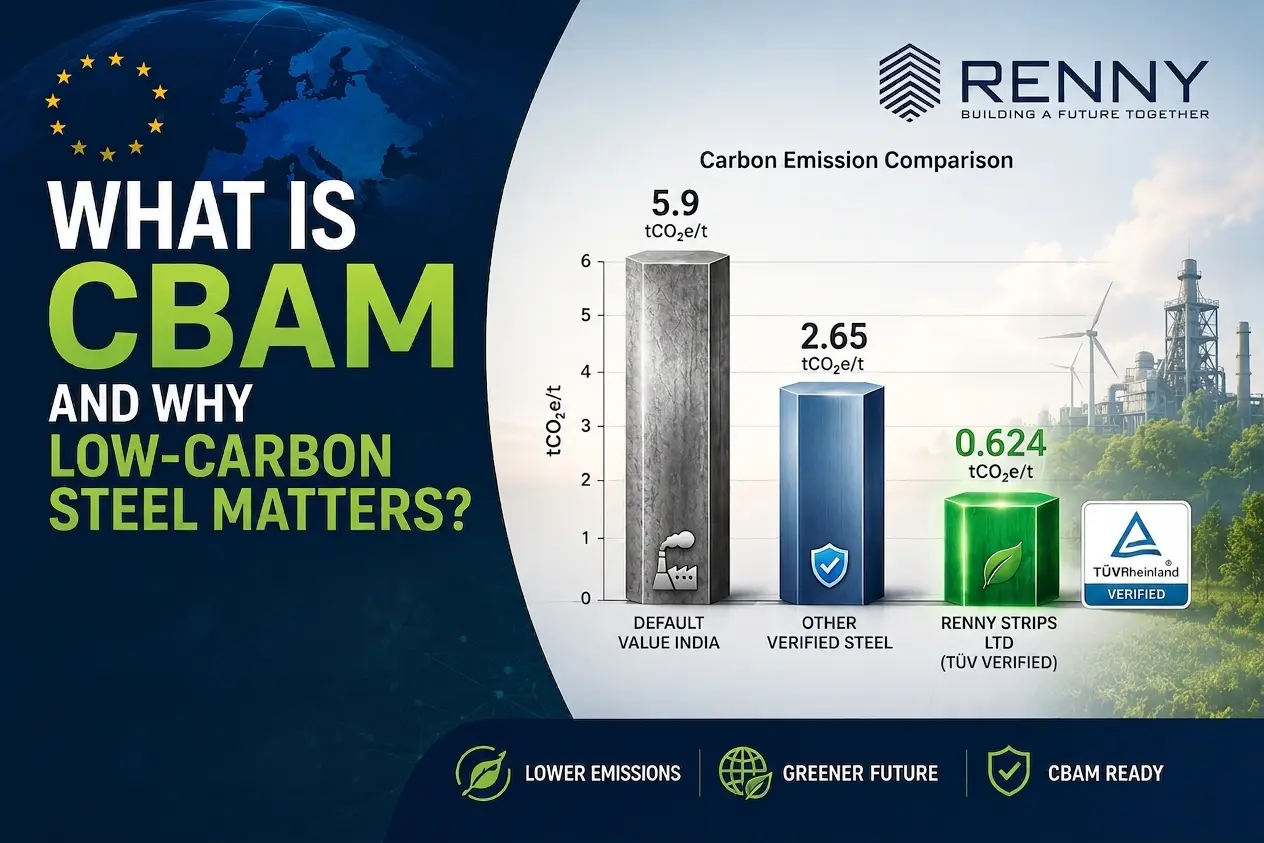
Without accurate and independently verified emissions data, exporters may be subject to default emission values set by regulators. These default values may not always reflect the actual carbon footprint of a product, potentially affecting its competitiveness in export markets.
The financial impact of carbon-related compliance requirements can become substantial over time, especially for businesses that export regularly to regions with strict environmental regulations. As global markets increasingly prioritize sustainability, carbon performance is becoming an important factor alongside product quality, pricing, and delivery capabilities.
At the same time, the transition presents new opportunities. Buyers across various industries are placing greater emphasis on environmental performance, supply chain transparency, and sustainability commitments. Companies that invest in reducing emissions, improving energy efficiency, and implementing robust carbon accounting systems can strengthen their position in international markets.
By adopting cleaner production practices and obtaining credible emissions verification, manufacturers can improve market access, enhance customer confidence, and align with evolving global sustainability standards. In the long term, proactive carbon management is likely to become a key competitive advantage for exporters seeking to participate in environmentally conscious supply chains.
CBAM Timeline: Where Things Stand Right Now
The transitional phase ran from October 2023. Reporting only during this window. No financial penalties, no certificate purchases yet. It was meant to give importers and exporters time to set up their emissions measurement and disclosure systems.
Full financial implementation starts in 2026. Businesses exporting ERW Pipes & Tubes and other steel products to Europe should prepare for these compliance requirements well in advance. That's when CBAM certificates become mandatory for every covered import.
| Phase | What It Means |
|---|---|
| Transitional Period (Oct 2023 to 2025) | Reporting obligations only, no financial penalty |
| Full Implementation (from 2026) | CBAM certificates required, priced against the EU ETS |
How Renny Strips Is Aligning With CBAM and Sustainable Steel Manufacturing
Renny helps businesses prepare for the evolving carbon-regulated trade environment through lower-emission steel manufacturing and enhanced transparency. Powered by up to 30% renewable energy and supported by a vertically integrated production model Vertical integration also enables greater control over the production of Narrow Width HR Coils, helping improve traceability and product consistency. with 90% in-house raw material production, Renny can achieve up to a 40% lower carbon footprint, creating the potential for significant CBAM cost savings. AI-driven emission monitoring and simplified emission tracking improve CBAM readiness, strengthen ESG performance, reduce carbon-related cost exposure, and provide greater supply chain transparency.
The steel industry has long been measured by strength and performance. Today, it is also being measured by sustainability, transparency, and carbon accountability. Learn how India's infrastructure sector is increasingly adopting structural steel solutions that combine strength with sustainability. As global regulations evolve, the future belongs to steel manufacturers that can deliver both high-quality products and verified environmental responsibility.
Conclusion
CBAM is reshaping the global steel industry by linking market access to carbon performance. As carbon costs become an increasingly important factor in international trade, steel manufacturers can no longer rely solely on product quality and competitive pricing. Carbon transparency, verified emissions reporting, and regulatory compliance are becoming essential requirements for exporting to major markets such as the European Union.
The transition toward low-carbon and green steel production is no longer a future consideration it is a strategic necessity. Manufacturers that invest in renewable energy, energy-efficient production processes, emissions monitoring, and sustainable manufacturing practices will be better positioned to reduce compliance costs and meet evolving customer expectations.
The future of steel manufacturing will be defined by sustainability, accountability, and innovation. Companies that embrace carbon transparency and proactively align with global environmental standards can strengthen their market position, enhance ESG performance, and gain a competitive advantage in an increasingly carbon-conscious economy.
Frequently Asked Questions
What is CBAM in simple terms?
CBAM is a carbon-related regulation introduced by the European Union. It requires importers to account for the emissions generated during the production of certain imported goods, including steel.
What does CBAM stand for?
CBAM stands for Carbon Border Adjustment Mechanism. It is part of the EU's efforts to support climate goals and encourage lower-carbon manufacturing practices globally.
Why did the EU introduce CBAM?
The EU introduced CBAM to create a more level playing field between domestic producers that comply with carbon regulations and imported products manufactured under different environmental standards.
How will CBAM affect the steel industry?
Steel manufacturers exporting to the EU may need to provide verified emissions data for their products. Companies with lower emissions and transparent reporting systems are likely to be better positioned in the European market.
What is green steel?
Green steel refers to steel produced using methods that significantly reduce greenhouse gas emissions, often through cleaner energy sources, recycled materials, and advanced production technologies.
What is sustainable steel manufacturing?
Sustainable steel manufacturing focuses on reducing environmental impact through energy efficiency, responsible resource use, renewable energy adoption, emissions management, and transparent reporting practices.
Which industries are covered under CBAM?
CBAM currently applies to sectors such as steel and iron, aluminum, cement, fertilizers, hydrogen, and electricity.
How does CBAM impact steel exporters?
Exporters supplying steel to the EU may need to meet additional reporting and verification requirements. Companies that can demonstrate lower emissions and provide reliable carbon data may gain a competitive advantage.
When does full CBAM implementation start?
Following the transition period, CBAM moves into its full implementation phase, where compliance obligations become more comprehensive for covered imports entering the EU.
How can steel exporters prepare for CBAM?
Exporters can prepare by measuring and monitoring emissions, establishing robust reporting systems, obtaining independent verification where required, and investing in initiatives that reduce carbon intensity across their operations. As sustainability becomes an increasingly important factor in global trade, businesses that prioritize emissions transparency and low-carbon manufacturing will be better positioned to meet evolving market expectations and regulatory requirements.
Need Help Choosing the Right Product?
Have questions about pricing, technical details, or bulk orders? Get in touch with our team.