
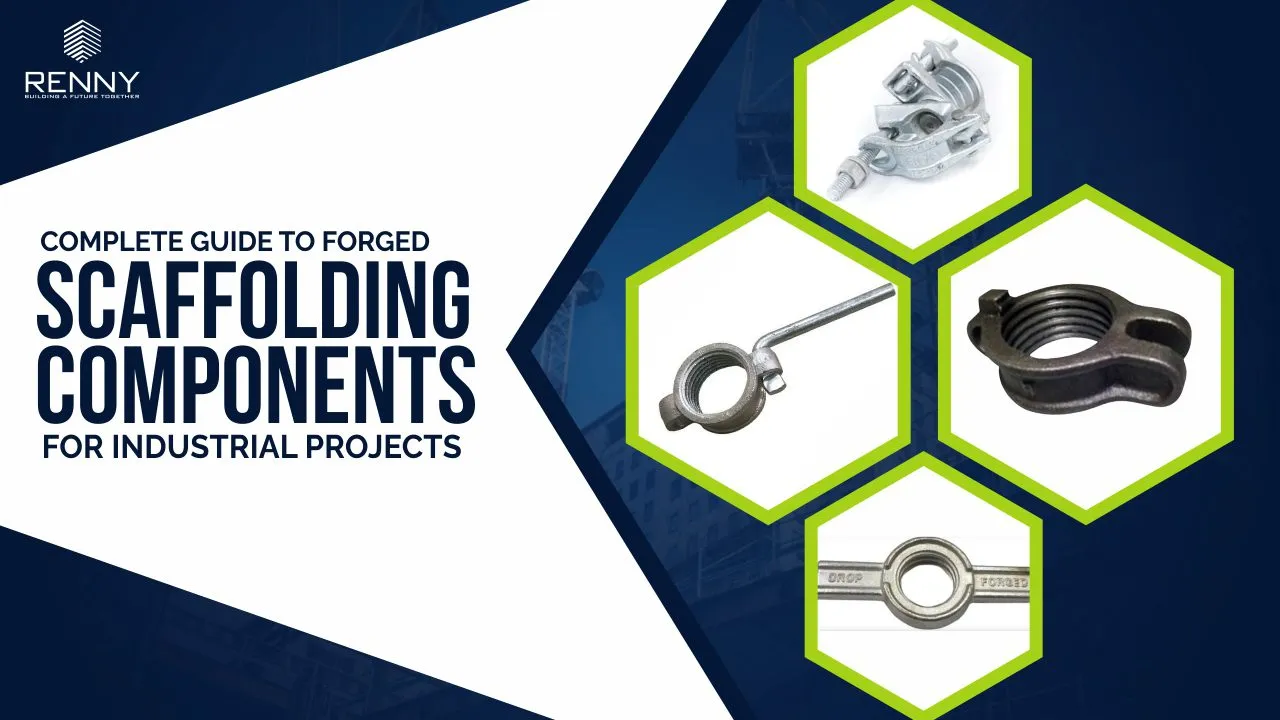
Most scaffolding looks identical from ground level. The differences show up under load, in harsh weather, after years of use. Forged components handle stress that weaker alternatives can’t. If you’re managing industrial projects where scaffolding supports serious weight and faces tough conditions, understanding forged components isn’t optional.
This guide walks through what makes forged scaffolding components different, which parts matter most, and how to pick the right ones for your project. For the bigger picture on how these parts fit into a full setup, see our complete guide to scaffolding and formwork systems, or browse the essential scaffolding and formwork components.
Why Forging Beats Other Manufacturing Methods?
The Grain Structure Advantage
Forging isn’t just about shaping metal. When you forge components from high-strength Q235 carbon steel, you’re aligning the metal’s grain structure along the shape of the part. This creates superior strength compared to cast or machined alternatives. Cast components can have weak spots from air pockets. Machined parts cut through the metal grain, potentially creating stress points.
Real-World Performance
Forged scaffolding components handle the constant loading and unloading happening on active construction sites. Workers are climbing up and down. Materials are being hoisted. Weather conditions are changing. Temperature swings. All of this puts stress on every connection point.
Renny Strips manufactures these components to meet AS1576 and EN 12811 standards. Those aren’t just certifications for marketing. They are assurances that every coupler, every plate, every forged end has been tested for the loads and stresses it will face.
Couplers: Where Flexibility Meets Strength
- Types and Their Uses
Scaffolding couplers are probably the most visible forged components on any site. They connect scaffold tubes at virtually any angle, creating flexible yet strong structures.
Renny’s coupler range covers different needs. Right-angle couplers for standard 90-degree connections. Swivel couplers for those awkward angles that always show up on complex structures. Putlog couplers for lighter, non-load-bearing connections.
- Drop-Forged vs Pressed Steel
What separates quality couplers from cheap ones? Load capacity and consistency.
Drop-forged couplers start as high-strength steel round bars heated to high temperatures. The heated bars get formed into coupler covers and bases using molds. Then comes cutting, drilling, and assembly with bolts and nuts. Finally, roundness tests and safety load testing.
- Why Galvanization Matters
The galvanized finish on Renny’s couplers isn’t cosmetic. It’s about longevity. Construction sites are brutal environments. Galvanized products generally don’t need repairs for twenty years. Some steel scaffolding with proper galvanization lasts 20-50 years.
Brace End Forging: Preventing Lateral Movement
- Understanding the Challenge
Wind hits a tall scaffold. Workers move across platforms. Materials get loaded unevenly. Without proper bracing, the whole structure could rack sideways and fail.
Brace end forgings create the connection point between diagonal brace tubes and the vertical or horizontal frame members. This connection needs handling stress from multiple directions simultaneously. The brace is pulling or pushing at an angle while the frame is carrying vertical loads.
- Built for Harsh Conditions
The design focuses on quick, secure installation. Construction schedules are tight. Proper engineering means brace ends that slide into position and lock securely without drama. Time saved during assembly and dismantling directly impacts project costs.
Industries using heavy scaffolding depend on this kind of reliable reinforcement. Power plants. Oil refineries. Shipyards. Large infrastructure projects. When the structure is supporting significant weight and exposed to environmental stress, you can’t afford weak connection points.
Ledger End Forging: Building the Horizontal Framework
- Load-Bearing Requirements
Ledgers are the horizontal tubes running between vertical standards, creating the levels and platforms where work actually happens. The ledger end forgings secure these horizontal members to the vertical frame with precision and stability.
These forgings need to deliver high load capacity because ledgers carry the working platforms, materials, and workers. A weak ledger connection can lead to platform collapse.
- Fast Assembly and Long Service Life
Renny engineers ledger end forgings for fast assembly. Well-designed ledger ends click into position securely and release easily when it’s time to reconfigure or tear down the scaffold. This matters during routine work and becomes critical during emergencies requiring rapid scaffold removal.
The galvanized finish extends service life significantly. These components get reused across multiple projects. Proper corrosion protection means they maintain their dimensional accuracy and strength through years of handling, weather exposure, and heavy use. Components that rust or deform lose their precision fit. When the ledger ends don’t seat properly anymore, you’re dealing with wobbly platforms and connections that might slip under load.
Combi Plates: Foundation Stability on Any Surface
The Load Distribution Problem
Here's something people don't think about until it becomes a problem: what's holding up the bottom of the scaffold? On concrete or asphalt, a simple base plate might work. But soft ground, uneven surfaces, or areas where you can't damage the underlying surface? That's where combi plates prove their worth.
How Load Spreading Works
A combi plate distributes the scaffold load uniformly across a larger ground area. Instead of all the weight concentrating on a small point (which causes sinking), the load spreads out, reducing pressure on any single spot. A person's weight concentrated on regular boots punches through the snow. The same weight spread across snowshoes stays on the surface. Combi plates work the same way with scaffold loads and soft ground.
Handling Uneven Terrain
Renny’s combi plates handle the reality of construction sites. Ground isn’t always perfectly level or consistently firm. The engineered design compensates for minor surface irregularities while maintaining scaffold alignment accuracy.
A scaffold that starts settling unevenly creates dangerous working conditions. Platforms tilt. Load distribution changes. Stress concentrates on some joints while others carry less than designed. All of this increases failure risk.
The plates also minimize ground damage, which matters on finished surfaces or sites where restoration costs factor into project budgets. Think about maintenance work inside an operating factory. You need scaffolding access to overhead equipment, but you can’t be tearing up the concrete floor.
Placing combi plates on sole boards (timber planks) enhances stability further on particularly soft ground. The combination of plate and board creates an even larger load distribution area.
Material Selection and Finish Options
- Q235 Carbon Steel Properties
Q235 carbon steel forms the foundation of Renny’s forging range. This isn’t exotic metallurgy. It’s proven material with the right balance of strength, ductility, and cost-effectiveness for scaffolding applications.
The forging process aligns the grain structure for maximum strength where it’s needed. Heat treatment ensures consistent properties throughout each component. Quality control catches any defects before components leave the factory.
- Finish Options for Different Needs
Renny offers multiple finish options for different environments and budgets. Hot-dip galvanizing for maximum corrosion protection in harsh conditions. The process involves pre-plating treatment, dipping in molten zinc, and post-plating treatment. This creates the thickest, most durable protective layer.
Powder coating for aesthetic requirements or specific chemical resistance. Painted finishes for standard applications. Self-finish where the environment allows it.
The components work across multiple scaffolding and formwork systems. This universal compatibility matters when you’re managing mixed equipment inventories or working with rental gear from different suppliers. Components that only work with one proprietary system create headaches and lock you into a single supplier.
Construction and Industrial Applications
- High-Rise Buildings
Tall structures need scaffolding that won’t buckle under massive loads or wind forces. Renny’s forged components handle the vertical stress and lateral pressure that comes with working dozens of stories up, keeping workers and materials secure throughout construction phases.
- Infrastructure Projects
Bridges, dams, tunnels, and highways require scaffolding in tough spots. Uneven terrain, water exposure, heavy vibration from traffic. Renny’s galvanized forged parts resist corrosion and maintain structural integrity even when conditions get brutal and access is difficult.
- Industrial Projects
Refineries, chemical plants, and manufacturing facilities deal with heat, corrosive chemicals, and tight spaces around machinery. Renny’s components offer custom configurations and corrosion resistance needed for maintenance access in environments where standard equipment fails quickly.
- Aerial Construction Work
When work happens overhead or in elevated positions, scaffold stability becomes critical. Renny’s couplers and bracing systems provide secure connections at any angle, allowing safe platform construction for workers accessing ceilings, roofs, or elevated structural elements.
- Construction Sites
General building projects need versatile scaffolding that assembles fast and adapts to changing requirements. Renny’s universal-fit components work across different scaffold systems, reducing equipment costs while maintaining safety standards for routine construction tasks.
- Formwork Applications
Concrete formwork demands scaffolding that handles heavy poured concrete loads without shifting. Renny’s ledger ends and base plates create stable frameworks supporting formwork panels, ensuring proper concrete placement for walls, slabs, columns, and complex architectural elements.
Why Reliable Supply Matters?
Components that work great but aren’t available when you need them might as well not exist. Construction schedules don’t wait for back orders. Renny Strips operates with high-volume production capacity and integrated logistics, ensuring fast, dependable delivery.
This vertical integration also allows tighter quality control. Material properties get verified before forging even starts. Fast turnaround from order to delivery means you can operate with leaner inventories. Less capital tied up in excess stock.
Need Help Choosing the Right Product?
Browse Renny's full range of scaffolding and formwork systems including couplers, brace ends, ledger ends, and combi plates for detailed specifications, or reach out to our team for guidance on the right components for your project.
Frequently Asked Questions
What are forged scaffolding components?
Forged scaffolding components are couplers, brace ends, ledger ends, and plates shaped by forging high-strength Q235 carbon steel rather than casting or machining it. Forging aligns the metal's grain structure along the part's shape, giving it higher load capacity and consistency than cast or pressed alternatives.
What's the difference between drop-forged and pressed steel couplers?
Drop-forged couplers are made from heated steel round bars formed into shape using molds, then cut, drilled, assembled, and load-tested — producing a denser, stronger part. Pressed steel couplers are stamped from sheet metal, which is faster to produce but generally offers lower load capacity and less consistency under repeated stress.
What standards do forged scaffolding components need to meet?
Quality forged scaffolding components are manufactured to AS1576 and EN 12811 standards, which require every coupler, plate, and forged end to be tested for the loads and stresses it will face on site, rather than relying on marketing claims alone.
Why is galvanization important for forged scaffolding components?
Galvanizing protects forged scaffolding components from corrosion in harsh, constantly changing site conditions. Properly galvanized components generally don't need repairs for around twenty years, and some galvanized steel scaffolding can last 20–50 years in service.
What are combi plates used for in scaffolding?
Combi plates distribute a scaffold's load across a larger ground area instead of concentrating weight on a single point. This prevents sinking on soft or uneven ground, keeps platforms level, and reduces the risk of stress concentrating unevenly on connection points.
What material are forged scaffolding components typically made from?
Q235 carbon steel is the standard material for forged scaffolding components. It offers a proven balance of strength, ductility, and cost-effectiveness, and after forging it goes through heat treatment and quality control before receiving a finish such as hot-dip galvanizing, powder coating, or paint.
Need Help Choosing the Right Product?
Have questions about pricing, technical details, or bulk orders? Get in touch with our team.