

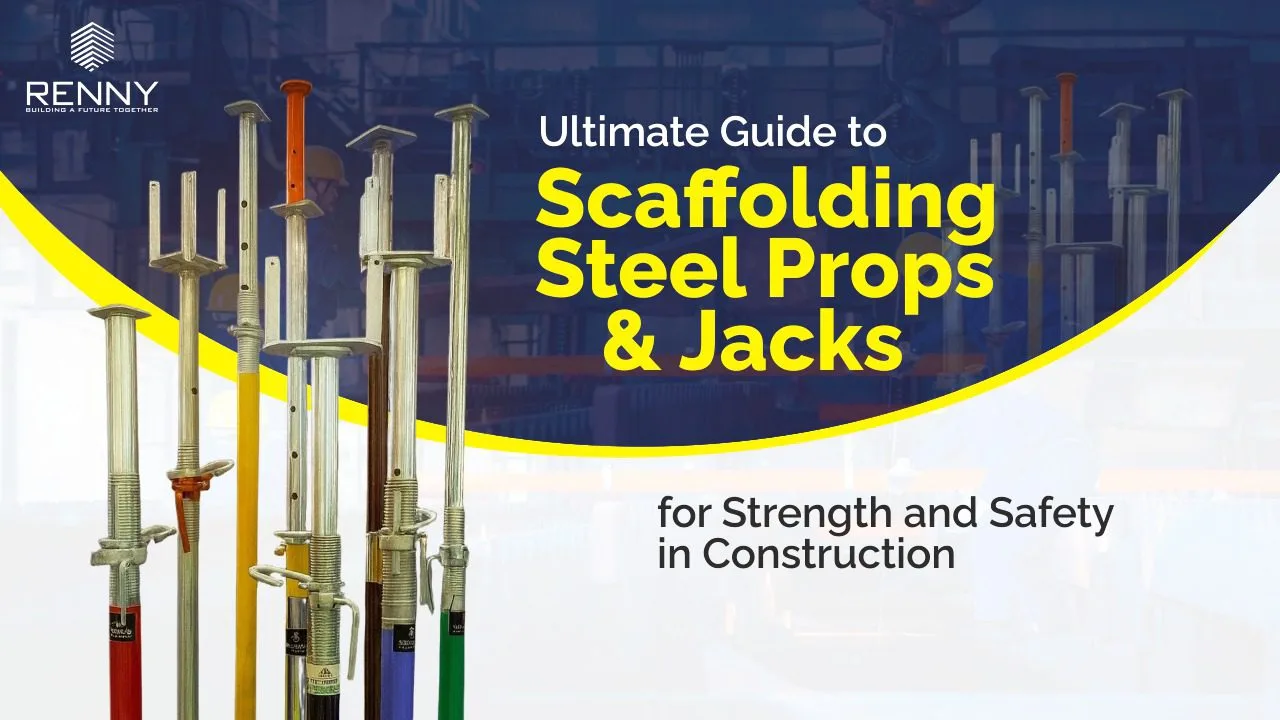
When working onsite, reliable propping systems can often make the difference between a smooth operation and one fraught with instability. That's where props and jacks come into play — key elements for creating strong, safe support in concrete formwork, elevated platforms, shoring and more. At Renny Strips, we've seen how the right specification, correct usage and strict maintenance of scaffolding steel props and jacks lead to safer facilities, improved productivity and long-term economy.
What are Scaffolding Steel Props and Jacks?
Props and jacks are adjustable steel support members used to transfer loads safely from formwork, slabs or beam soffits down to supporting surfaces. A steel prop is typically a tubular member with an adjustable screw or jack plate allowing fine height correction; the jack is a specific component (jack nut or base jack) allowing height control and bearing at the top or bottom of the prop. Together, prop jacks form one of the most widely used propping systems on construction sites — and in the Indian market, this category is also very commonly searched for and referred to as acrow props, a genericised industry term for adjustable steel props. At Renny Strips, our fabrication of formwork and scaffolding includes high strength S355 carbon steel, with finishes such as hot dip galvanised (H.D.G.), powder coated, painted, electro galvanised or self finish, to ensure corrosion resistance and durability even in harsh onsite conditions.
These systems are engineered to meet demanding structural mandates. At Renny Strips, our fabrication of formwork and scaffolding includes high strength S355 carbon steel, with finishes such as hot dip galvanised (H.D.G.), powder coated, painted, electro galvanised or self finish, to ensure corrosion resistance and durability even in harsh onsite conditions.
Why Strength and Safety Matter
In every construction zone, the loads involved are heavy and often unpredictable. Effects such as concrete pouring, lateral forces from wind, working platform traffic and dynamic changes during curing or demolition all place a burden on the props and jacks used. If they are under-specified, poorly installed or not maintained, consequences may include:
- Uneven settlement of formwork leading to cracking or failure
- Uncontrolled deflection or collapse of shoring, risking injury and work disruption
- Premature wear, corrosion or fatigue of components, increasing cost over time
By selecting the right scaffolding steel props and jacks, ensuring high-quality finishes, and regular inspection, those risks are mitigated. Renny Strips emphasises "Safety & Stability" and "Material Strength" as core strengths of our system offerings.
Key Parameters to Specify
When choosing props and jacks, professionals should examine these parameters carefully:
- Load capacity: Ensure the props are rated for the maximum anticipated load (including dynamic factors). Manufacturer's data and test reports should be available.
- Height adjustability: The prop must accommodate required elevation from floor to slab/beam underside, with sufficient adjustment range via the jacks or screw threads — a key reason prop jacks are specified by height class on most project drawings.
- Finish and corrosion resistance: Especially for outdoor or exposed environments: galvanised, powder coated or self-finish steel ensure longevity. Renny offers multiple finishes to match site requirements.
- Material quality: Use high-grade steel (such as S355 low carbon steel ) and components forged or fabricated to meet standards like AS1576 or EN 12811.
- Compatibility and modularity: Props should work seamlessly with the rest of the formwork/shoring system — modular systems allow easier assembly, reuse and logistic ease. At Renny, there's emphasis on "Universal Fit" and "Versatile Use" of scaffolding/formwork systems.
- Inspection and certification: Every prop/jack should be traceable, test-certified and subject to periodic inspection for wear, thread damage, corrosion or misalignment.
Types of Scaffolding Steel Props and Jacks
Not all props and jacks are built for the same job — matching the right type to the right load and application is as important as the specification itself.
By duty class
Light-duty props suit smaller slabs and formwork with lower load requirements. Medium and heavy-duty props are rated for larger slabs, beam soffits and multi-storey shoring, where higher load capacity and reinforced tube walls are essential.
By height/size Prop jacks
are typically supplied in standard telescopic size ranges, allowing a single prop to adjust across a fixed height band rather than needing a separate prop for every floor-to-slab height on site.
By jack type
- U-head jack
bears directly under a beam or joist, commonly used at the top of the prop.
- Base jack
provides fine height adjustment and bearing at the base of the prop, especially on uneven ground.
- Swivel/prop nut
allows quick, incremental height adjustment via the threaded tube.
Selecting the correct combination of prop duty class and jack type up front reduces onsite adjustment issues and keeps scaffolding steel props and jacks performing within their rated safety margins.
Installation Best Practices
Even the highest quality props and jacks will perform poorly if installed incorrectly. Here are best practice steps:
- Base preparation
Ensure the supporting ground or structure is level, compacted and able to bear the load. Use base plates and bearing pads as required.
- Prop placement
Place props vertically where possible; avoid excessive lean or offsetting load paths. Props should bear directly under the load transfer point (beam, slab formwork, etc.).
- Adjusting height
Elevate the prop to fit snugly but allow some adjustment via the jack nut or screw thread. Avoid forcing the prop beyond its vertical adjustment range.
- Bracing and lateral stability
While props handle vertical loads, lateral stability must also be ensured especially high stacks of props may require ties or bracing to resist tipping.
- Load staging
Introduce loads gradually rather than instant full load. Monitor for settlement or movement
- Inspection
Before loading, inspect every prop and jack for thread damage, base plate distortion, corrosion, or missing components. During use, monitor for signs of deflection, cracking of adjacent formwork or unusual movement.
Maintenance & Lifecycle Considerations
Props and jacks are reusable assets, but regular maintenance is vital:
After each use, clean off concrete splatter, rust, and other debris to preserve threads and surfaces.
Store upright, off the ground, under cover if possible, to minimise corrosion.
Threads should be lightly greased to prevent galling and ensure smooth adjustment over time.
Periodic inspection should include measuring deviation from vertical, thread wear, corrosion of jack plates or base plates, and any distortion of tubes.
Retire any component that shows major corrosion, cracking, or distortion; these compromise strength and safety.
Renny Strips emphasises that their components are built for “Reusability” and “Long Life Cycles” a key factor when choosing a supplier who understands the full lifecycle of construction assets.
Choosing the Right Supplier
Selecting a supplier for scaffolding steel props and jacks involves more than price. Here’s what to look for:
- Finish options
Availability of corrosion-resistant finishes (ERW Pipes and Tubes, H.D.G., powder coat, painted, electro galvanised) helps adapt to diverse site environments.
- Technical support
Can the supplier provide guidance on load computations, height adjustment limits, safe usage practices and logistics for props and jacks across different project types?
- Stock and logistics
Given the nature of construction projects, timely supply, backups and reuse support are essential. Renny emphasises "Reliable Supply" and "Integrated Logistics" as part of their offering.
- Track record and testimonials
Check references for performance under actual site conditions, in both simple and complex support environments.
- Life cycle cost
Lower upfront cost may hide higher maintenance, rework or early retirement costs — so factor in durability, reusage, corrosion resistance and resale value.
Onsite Safety Checklist
To further cement safe operation of props and jacks, maintain the following checklist:
All props and jacks are clearly tagged with identification, date of last inspection and safe working load.
No props are overloaded – check actual applied load and compare with rated load.
Adjustment threads are fully engaged and free of damage or deformation.
Bearing plates and nuts are correctly fitted, and all locking nuts/washers are secured.
Hazardous areas (near edges, openings, heavy traffic) have additional protective measures such as guardrail systems or exclusion zones.
Regular checks during concrete pour and curing phases monitor for settlement, misalignment or damage.
End of‐shift inspection logged and any issues corrected before next morning.
Conclusion:
When the mission is safe, stable, efficient support of slabs, beams or elevated platforms, the role of scaffolding steel props and jacks cannot be overstated. From specifying the correct load capacity and adjustability, choosing finishes that resist corrosion, installing with precision, and committing to maintenance and reuse the rewards are fewer delays, lower risk and better return on investment.
At Renny Strips, our experience in forging, fabrication and precision engineered components for formwork and scaffolding spans decades. Whether you’re working on infrastructure, high rise commercial construction, industrial fabrication or complex modular systems, the right props and jacks form the foundation of structural safety and operational efficiency.
For contractors, engineers and site managers who demand high performance, durable and globally compliant propping systems investing in quality is not optional. With the right equipment and procedures in place, you move from risk management to proactive stability, enabling the project to stay on schedule, within budget and above standard.
Let’s build safe, strong structures together.
Frequently Asked Questions
What is the difference between a prop and a jack in scaffolding?
A prop is the full adjustable support member (the tube assembly), while a jack refers specifically to the height-adjusting component — such as the base jack or U-head jack — fitted at the top or bottom of the prop. In practice, the terms "props" and "jacks" are used together because both parts work as one system.
Are Acrow Props the same as Scaffolding Steel Props?
Acrow Prop is a widely used industry term — especially in India — for adjustable steel props in general. Technically, it originated as a specific brand name, but today it's commonly used to describe any adjustable steel prop and jack system, including the ones covered in this guide.
What are prop jacks used for?
Prop jacks are used to support formwork, concrete slabs, beams and elevated platforms during construction, providing adjustable height and load-bearing capacity until the structure can support itself.
What load capacity should scaffolding props and jacks have?
Load capacity depends on the application — slab thickness, height, and dynamic loading during concrete pour. Always check manufacturer test data and match the prop and jack rating to the maximum anticipated load, including a safety margin.
How often should props and jacks be inspected?
Props and jacks should be inspected before every use, during load-bearing phases (such as concrete curing), and at the end of each shift, in addition to periodic maintenance checks for thread wear, corrosion and distortion.
What finish is best for scaffolding steel props and jacks?
For outdoor or long-duration use, hot-dip galvanised (H.D.G.) or powder-coated finishes offer the best corrosion resistance. Painted or electro-galvanised finishes suit shorter-term or indoor applications.
Need Help Choosing the Right Product?
Have questions about pricing, technical details, or bulk orders? Get in touch with our team.